Table of Contents
- What RCS business messaging is
- iPhone support depends on the carrier
- How fallback to SMS affects tracking
- Tagging rich card and button URLs
- Should RCS use utm_medium=sms or rcs?
- Setting up an SMS & RCS custom channel group
- What changes from SMS, and what doesn't
- QA checklist for RCS campaigns
- What to do now
- FAQ
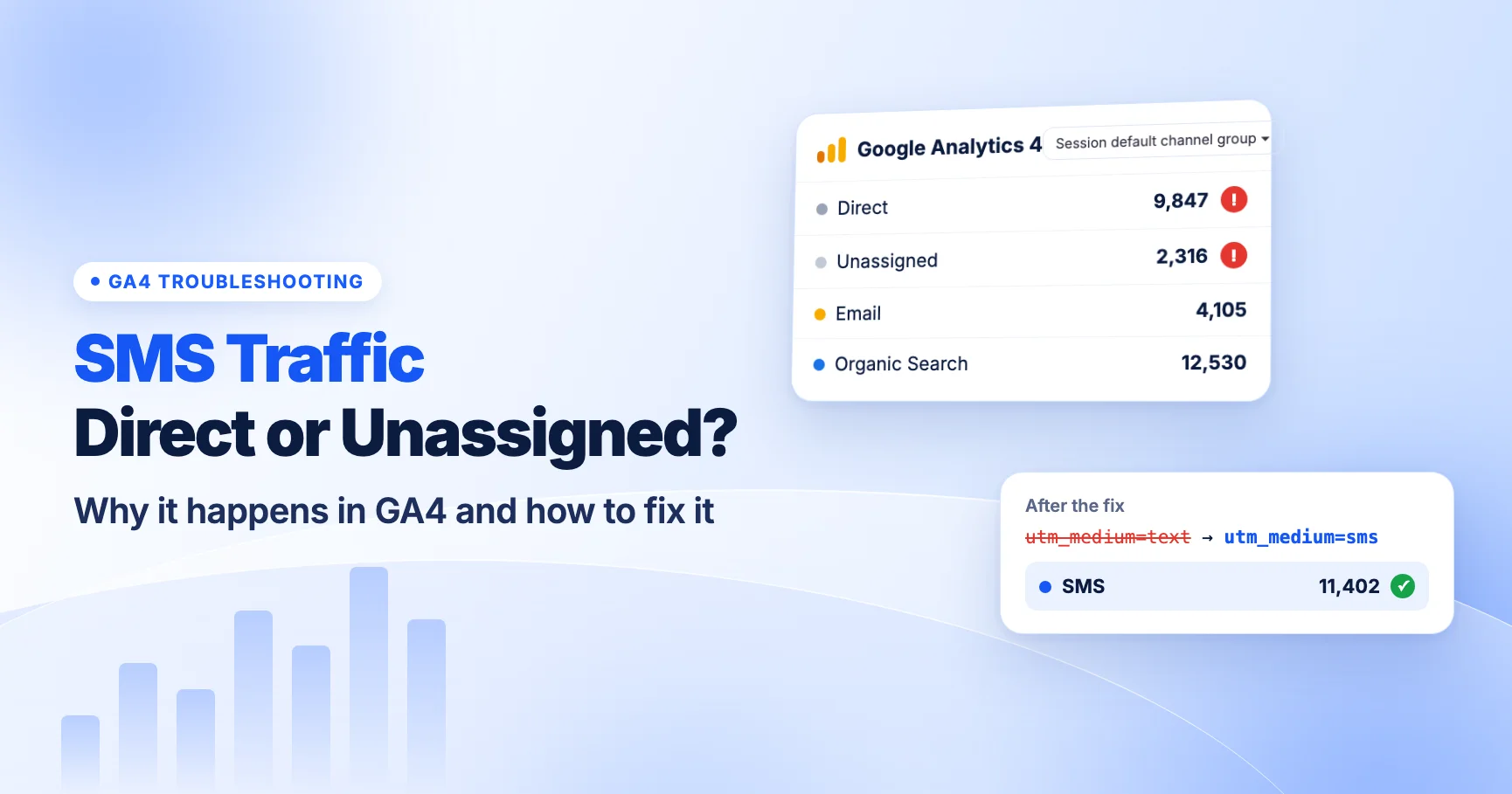
RCS links need UTMs just like SMS links, but the medium you choose decides where GA4 puts them. GA4's default SMS channel only matches a medium (or source) of exactly sms. If your platform tags RCS clicks with utm_medium=rcs, those sessions go to Unassigned unless you add a custom channel group. RCS also adds new places to put links, such as rich cards and buttons, and each of those URLs needs its own tags.
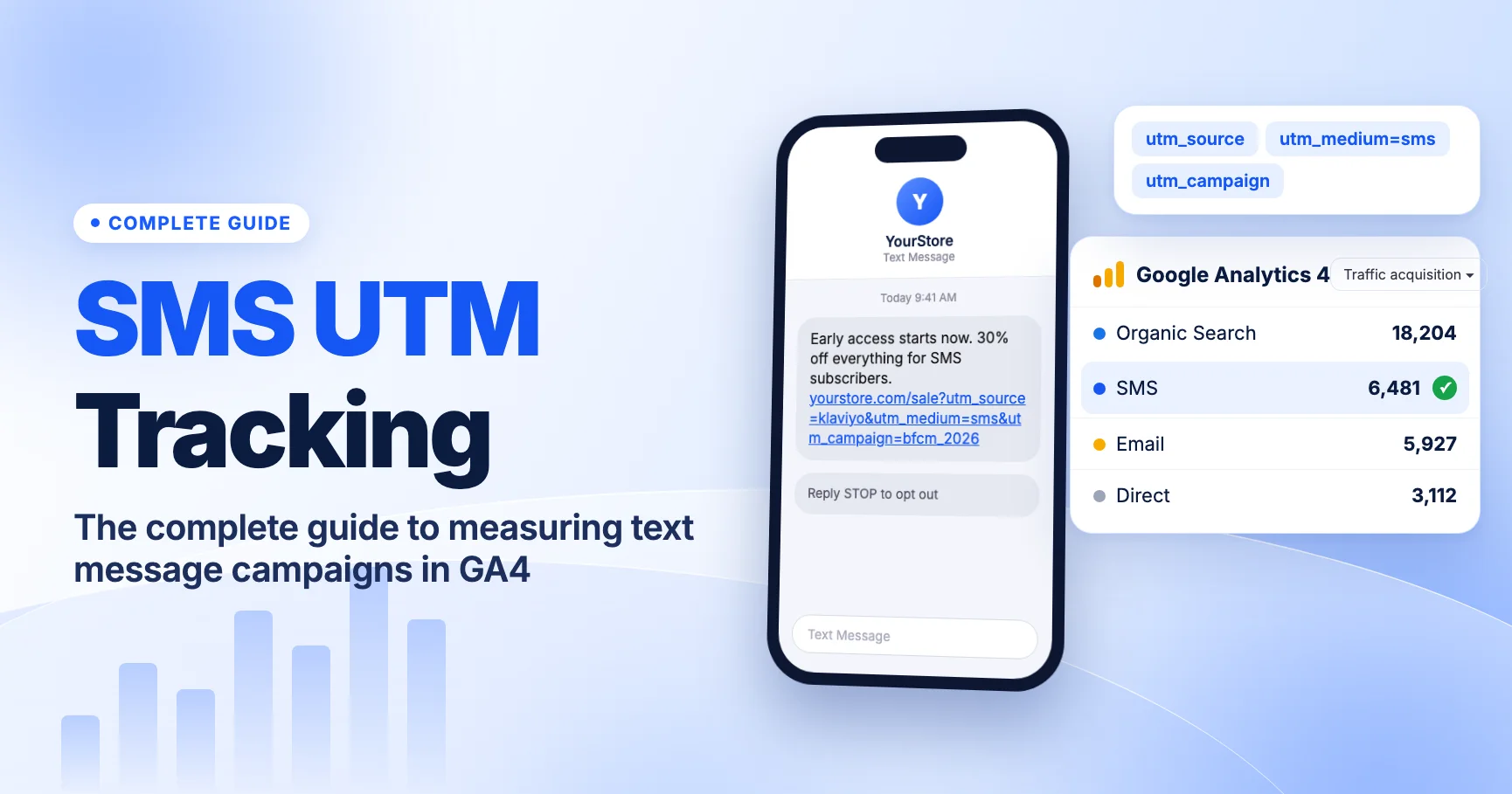
This post builds on our complete guide to SMS UTM tracking in GA4. Read that first if you're setting up text message tracking from scratch.
What RCS business messaging is
RCS (Rich Communication Services) is the upgraded messaging standard that replaces plain SMS in the phone's default messaging app when the device and carrier support it. For brands, RCS business messaging adds features SMS can't do:
- Verified sender branding, such as a business name and logo.
- Rich cards with an image, title, description and buttons.
- Carousels of several cards.
- Suggested actions and replies, which are tappable buttons such as "Shop now" or "Track order".
- No 160-character segment limits like the ones that shape SMS copy.
From a tracking point of view, the important change is that links no longer live only in the message text. They live in buttons and cards, and the sender configures each URL separately.
iPhone support depends on the carrier
Apple added RCS support to iPhone in iOS 18 (2024). That doesn't mean every iPhone user can receive RCS business messages. Business messaging on iPhone depends on carrier support, and that varies by carrier and country.
What this means in practice:
- Your audience will be mixed. Some subscribers get RCS, some get SMS. You usually can't choose who gets which.
- Don't assume reach. Check with your messaging platform which carriers and regions it can deliver RCS to today. We're not going to quote adoption numbers here because they change quickly and vary by market.
- Plan for both formats in one campaign. Your tracking has to work whether a given subscriber sees the RCS version or the SMS version.
How fallback to SMS affects tracking
Most RCS business messaging setups fall back to SMS (or MMS) when the recipient can't receive RCS. The exact behavior depends on your platform, so check your account settings. Fallback has three tracking effects.
- The link changes shape. In RCS, the link may sit behind a button. In the SMS fallback, it's a short link in the message body. Make sure both versions point to a destination URL with UTMs on it.
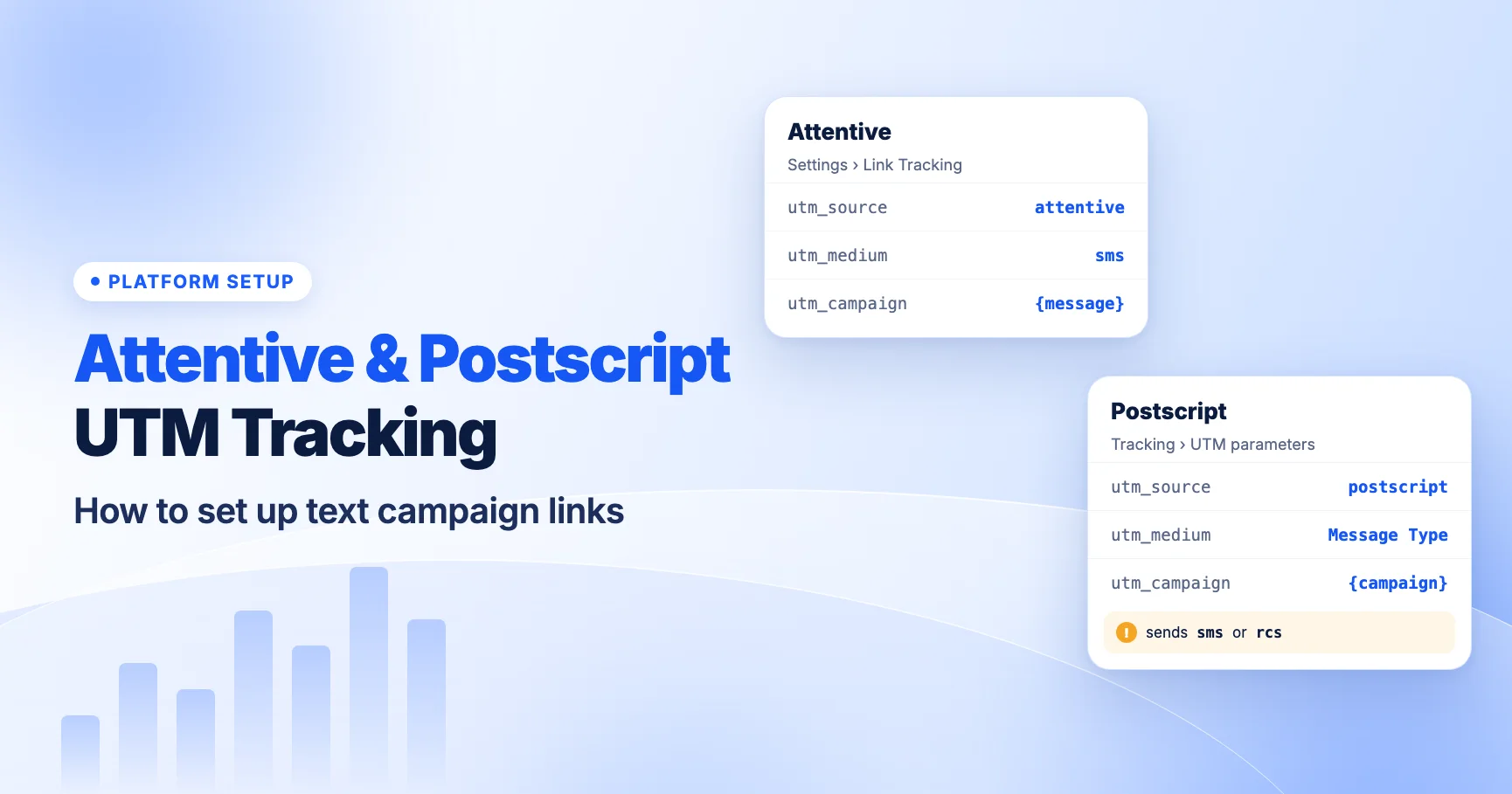
- The medium may change automatically. Some platforms set the medium based on the channel actually delivered. Postscript, for example, replaced its static "SMS" medium with a Message Type token that tags traffic as SMS or RCS depending on the channel used. See Postscript's global UTM parameters article.
- One campaign, two mediums. If the medium follows the delivered channel, one send produces some
smssessions and somercssessions. That's useful for comparison, but only if GA4 classifies both properly.
Short links still matter in the fallback version. If the SMS fallback uses a shortener, confirm the UTMs survive the redirect. Our post on whether UTMs survive link shorteners walks through the test.
Tagging rich card and button URLs
With SMS, there's usually one link per message. With RCS, one message can contain several: a card image link, a primary button, a secondary button, and links in a carousel. Each one is a separate URL that the sender configures.
Rules we recommend:
- Tag every button URL. An untagged button URL opened from a messaging app usually arrives without a referrer, so GA4 is likely to call it Direct.
- Keep source, medium and campaign identical across every link in the message.
- Use
utm_contentto tell buttons apart, for examplecard1-shop-now,card2-shop-noworbtn-track-order. That's the only way to see which button or card drove the session. - Check whether your platform adds UTMs to button URLs automatically. Some platforms tag message-body links but treat button URLs as separate fields. Check your account and preview a test message.
- No personal data. Don't put phone numbers, names or emails in UTM values. Google's policies don't allow it.
An example button URL:
https://example.com/boots/?utm_source=postscript&utm_medium=rcs&utm_campaign=fall-sale-2026&utm_content=card2-shop-now
For more on utm_content, see how to find utm_content and utm_term in GA4.
Should RCS use utm_medium=sms or rcs?
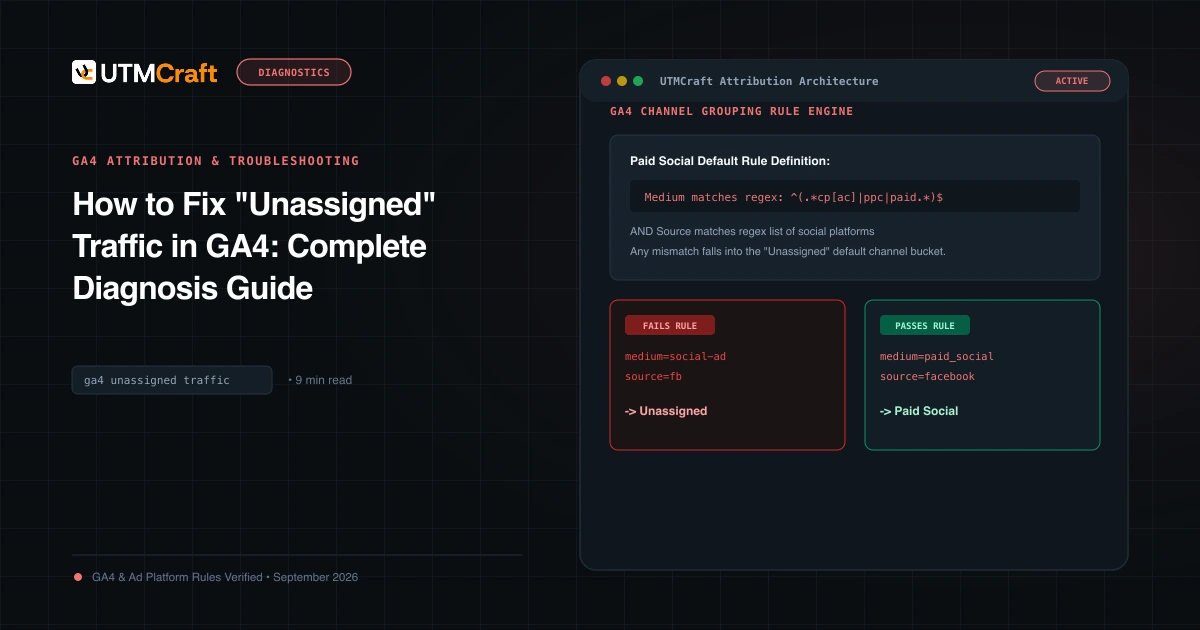
This is the main decision. GA4's default channel group puts a session in the SMS channel only when the source or medium exactly matches sms. There's no default rule for rcs. So:
| Option | Default channel in GA4 | Pros | Cons |
|---|---|---|---|
utm_medium=sms for RCS too | SMS | Works with no GA4 changes. All text messaging stays in one default channel. | You can't separate RCS from SMS by medium. You need utm_content or a custom parameter to tell them apart. |
utm_medium=rcs | Unassigned (unless you add a custom channel group) | Clean RCS vs SMS comparison. Matches platforms that tag by delivered channel. | Breaks the default SMS channel. Needs a custom channel group, and anyone using default reports will see Unassigned. |
utm_medium=rcs + custom channel group | Unassigned in default; "SMS & RCS" in your custom group | Best of both: separate mediums, one channel in your own reports. | Needs GA4 admin access, and people must choose the custom group in reports. |
Our recommendation
If your platform tags by delivered channel (like Postscript's Message Type token), keep rcs and add a custom channel group. Fighting the platform default is fragile, and the RCS vs SMS split is worth having while RCS is new.
If you set UTMs by hand and can't edit GA4 channel groups, use sms for both and mark RCS in utm_content (for example rcs-card1-shop-now). You lose the clean medium split, but nothing lands in Unassigned.
Either way, check what value actually shows up in GA4. Look at Session medium for recent text campaigns and confirm the exact case and spelling (sms, SMS, rcs). We recommend lowercase everywhere.
Setting up an SMS & RCS custom channel group
A custom channel group lets you define your own rule for RCS without changing the default group. Google's documentation is here: [GA4] Custom channel groups.
- In GA4, go to Admin > Data display > Channel groups.
- Create a new channel group. Starting from a copy of the default group keeps every other channel the same.
- Add a channel named SMS & RCS with the condition: Medium matches regex
^(sms|rcs|mms)$. - Move it above Unassigned and above the default SMS channel. Channel rules are evaluated in order, so a session goes to the first channel it matches.
- Save, then open Traffic acquisition and switch the channel dimension to your custom group.
Custom channel groups apply to reports retroactively, so RCS sessions already sitting in Unassigned will move into the new channel once it's saved. That makes this a low-risk fix even if you've been sending RCS for a while.
If you're seeing a rise in Unassigned traffic after a platform change, our post on why SMS traffic shows as Direct or Unassigned covers other likely causes.
What changes from SMS, and what doesn't
| Area | SMS | RCS |
|---|---|---|
| Links per message | Usually one, in the text | Several, in cards and buttons |
| Short links | Common, to save characters | Less needed in buttons; still used in SMS fallback |
| GA4 default channel | SMS (if medium or source is exactly sms) | No default rule for rcs |
| utm_content use | Message variant | Card and button identification |
| Delivery | Any phone | Depends on device and carrier; falls back to SMS |
| Referrer on click | Usually none | Usually none |
What stays the same: tag every link, keep names consistent, keep personal data out, and test a real click. Our SMS UTM naming templates work for RCS too. Just decide on the medium first.
QA checklist for RCS campaigns
- Send a test to an RCS-capable device and to a device that will receive the SMS fallback.
- Tap every button and card. Confirm each landing URL carries UTMs, with a distinct
utm_content. - Tap the short link in the SMS fallback and confirm the UTMs survive the redirect.
- Check GA4 Realtime for the medium value each version actually produces.
- Confirm the custom channel group (if you use one) catches both
smsandrcs.
The general UTM QA checklist covers the rest.
What to do now
- Ask your messaging platform whether it sends RCS, and what
utm_mediumit uses for RCS clicks. - Check Session medium in GA4 for
rcssessions sitting in Unassigned. - Decide:
rcsplus a custom channel group, orsmsfor everything with RCS marked inutm_content. - Tag every card and button URL, with a unique
utm_contentfor each. - Test both the RCS and the SMS fallback version before every send.
Use UTMCraft to build consistent links for every button in the message.
FAQ
Does GA4 have a default channel for RCS?
No. GA4's default channel group has an SMS channel that matches a source or medium of exactly sms. A medium of rcs doesn't match any default rule, so it goes to Unassigned unless you create a custom channel group.
Why did my SMS traffic start showing as Unassigned?
If your platform started tagging RCS clicks with utm_medium=rcs, those sessions no longer match the SMS channel. Check Session medium for rcs, then add a custom channel group or change the medium.
Do iPhones receive RCS business messages?
iOS 18 added RCS support, but business messaging on iPhone depends on the carrier. Ask your platform which carriers and regions it can reach.
Do I need UTMs on RCS buttons?
Yes. Each button and card URL is a separate link. Without UTMs, clicks usually arrive with no referrer and show up as Direct. Use utm_content to tell buttons apart.
What happens to tracking when RCS falls back to SMS?
The subscriber gets a plain text version, usually with a short link. Make sure that link's destination has UTMs too. Depending on your platform, the medium may switch from rcs to sms automatically.
For the broader setup, read SMS UTM Tracking: The Complete Guide to Measuring Text Message Campaigns in GA4. Browse the SMS & Messaging Tracking guides to choose another troubleshooting task.
References
- [GA4] Default channel group (Google Analytics Help)
- [GA4] Custom channel groups (Google Analytics Help)
- Adjust your global UTM parameters (Postscript Help Center)