

What Is utm_source? Naming Standards, Taxonomy & Common Mistakes
Learn what utm_source is, how Google Analytics 4 uses it to determine traffic origin, approved naming conventions, and common mistakes that split reporting.
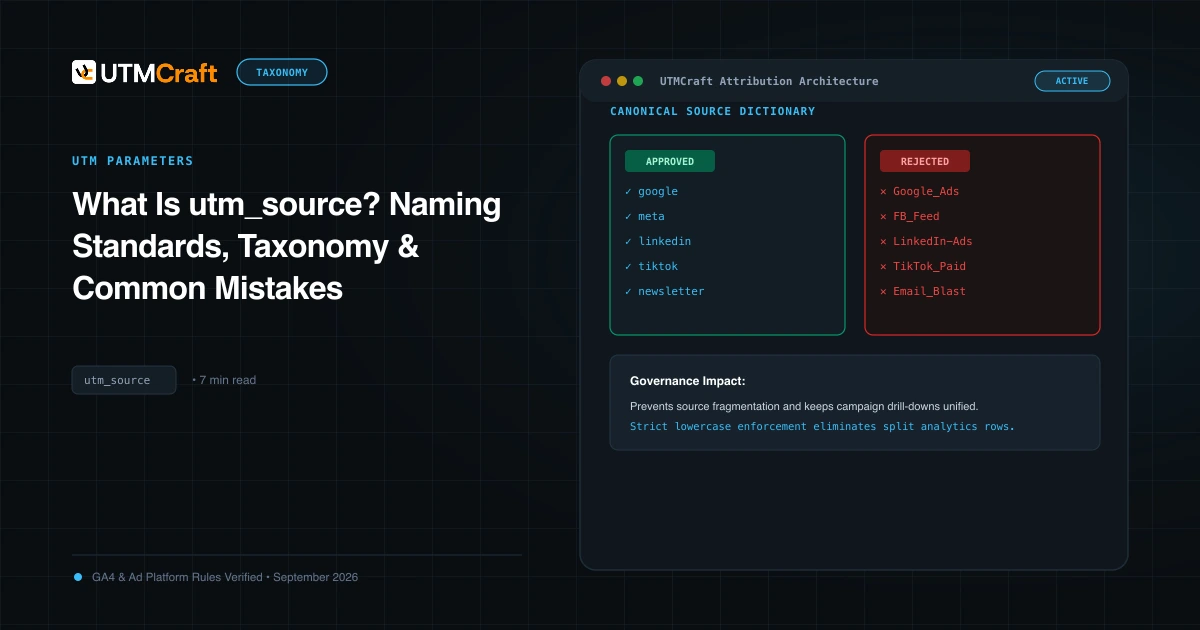
Table of Contents
utm_source is the foundational parameter in web attribution. It answers a single, direct question: Which specific platform, publisher, or partner sent this visitor to your website?
What Is utm_source?
In Google Analytics 4, utm_source populates the Session source and First user source dimensions. It is technically mandatory for manual campaign tracking: if you omit utm_source from a link that includes utm_medium or utm_campaign, GA4 cannot determine the traffic origin and will frequently categorize the visit as (direct) or (not set).
Approved utm_source Values by Platform
To prevent fragmented reporting rows, enforce consistent, all-lowercase platform names:
| Marketing Channel | Approved utm_source Value | Forbidden Variations (Will Split Reports) |
|---|---|---|
| Google Ads / Search | google |
Google, googleads, adwords |
| Meta (Facebook & Instagram) | facebook, instagram, or meta |
FB, Facebook_Ads, ig |
| LinkedIn Ads / Organic | linkedin |
LinkedIn, lnkd, li |
| X (Twitter) | x or twitter |
Twitter, tweet, x.com |
| Email Marketing | newsletter, klaviyo, hubspot |
email (this is a medium, not a source!) |
| Affiliates / Partners | [partner_name] (e.g. wirecutter) |
affiliate (this is a medium!) |
The Difference Between Source and Medium
Source = The WHO (The specific publisher: google, facebook, substack).
Medium = The HOW (The transmission channel type: cpc, paid_social, email).
Common utm_source Mistakes That Break GA4
A very common tracking error is setting utm_source=email&utm_medium=email or utm_source=email&utm_medium=newsletter. Email is the vehicle (medium), not the source. Your source should be the specific publication or platform sending the message, such as newsletter_weekly, product_updates, or klaviyo.
Sources & Authoritative References
- GA4 Traffic Source Dimensions (Google Analytics Help)
Related Measurement Guides
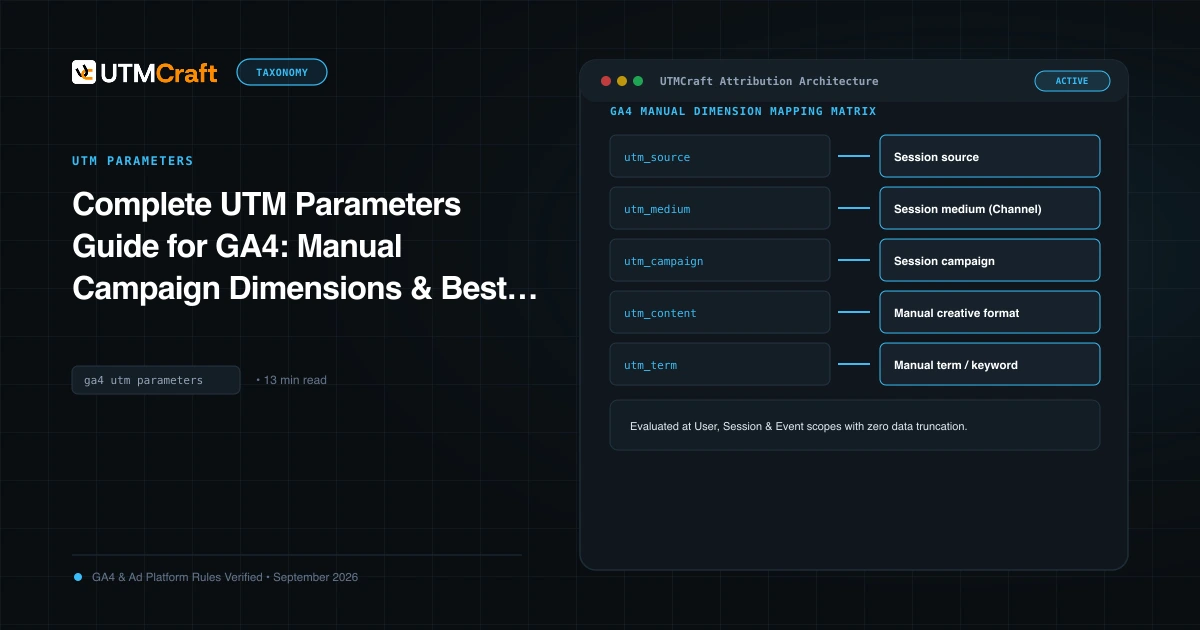
Complete UTM Parameters Guide for GA4: Manual Campaign Dimensions & Best Practices
The definitive technical reference to all 9 UTM parameters in Google Analytics 4, dimension mappings, character limits, encoding rules, and reporting caveats.
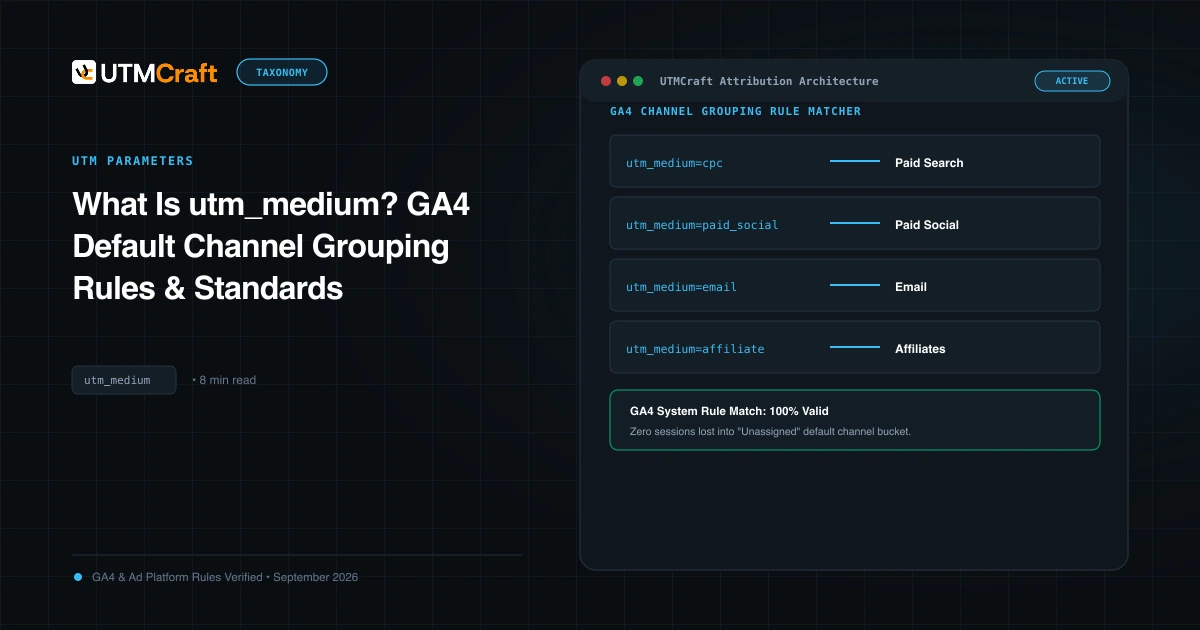
What Is utm_medium? GA4 Default Channel Grouping Rules & Standards
Understand utm_medium and how GA4 uses it to classify sessions into Default Channel Groups. Avoid Unassigned traffic with exact medium naming rules.
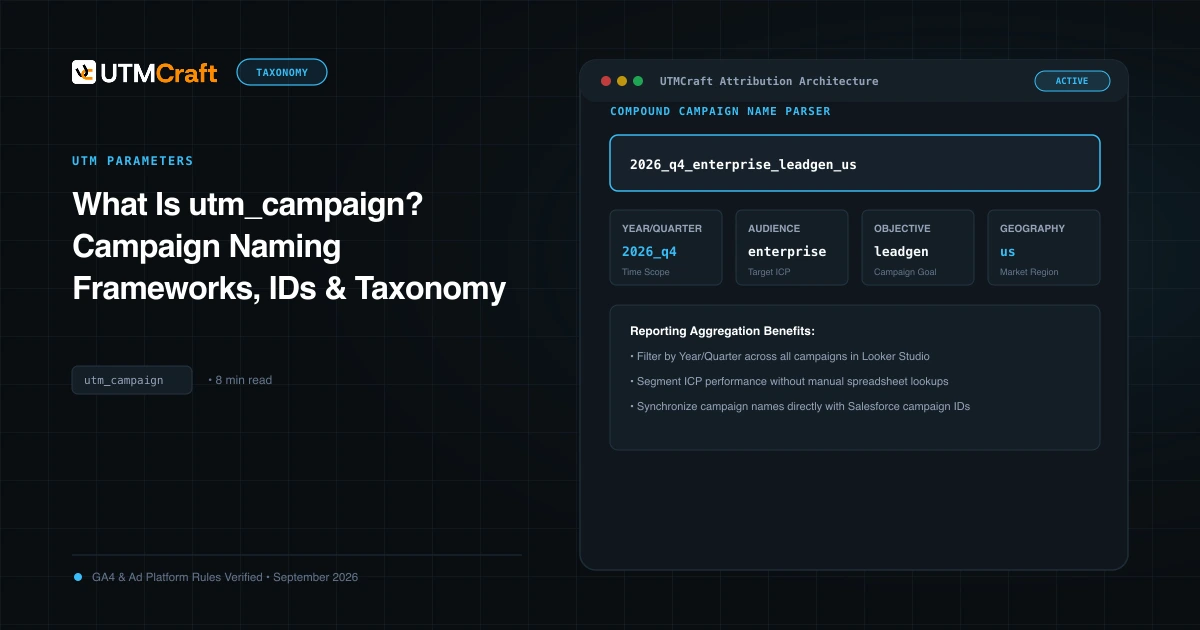
What Is utm_campaign? Campaign Naming Frameworks, IDs & Taxonomy
Learn how to structure utm_campaign for clear GA4 reporting. Discover formula frameworks, campaign IDs (utm_id), delimiter best practices, and real examples.